Monday, November 9, 2015

Jumper Johnson and the Radioactive Mulch Heap

In the interest of disclosure, let me immediately point out that the Johnson Jumper is a species of small spider native to California and the radioactive mulch heap wasn’t.

I encountered my neighbor John at our shared garbage bins, where he told me excitedly he had just killed a black widow spider.  “No kidding!  Are you sure?” I asked him.  I thought black widows preferred a more arid environment; we live in Northern California and the only time I had ever seen one was near Prescott, Arizona.  Not only that, but our usual spider season in this area is not until August, and it was only March.  Nevertheless, John swore he had killed a black widow spider complete with the characteristic red mark on its back.

A few minutes later he called me over to see for myself; he had found two more right there on our shared path.  John seemed a little freaked out—in fact, he told me he gets freaked out by spiders—so I sought to reassure him that this was not a poisonous species.  I told him it was probably either a wolf or a jumping spider; the red markings on the back were definitely not that of a black widow.

The specimens we were looking at were especially not dangerous, I added, since they were both dead and in the process of being eaten by ants.  “I think that one’s still alive,” John said cautiously.  “Look, the legs are still sort of moving.”  They were moving because the ants swarming around the spider were tugging on its legs.  I didn’t mention that in case John had, or was about to get, an ant phobia, as well.

Instead, I talked about the two species I figured we were looking at -- where they typically lived, what kinds of webs they built, how they hunted.  The information I provided was aimed at assuaging worries he had expressed about being bitten by poisonous spiders.  Rather than trying to explain how I knew all this – which was a complicated story - I just said I had taken a nature course once.

To my utter surprise, John not only seemed to believe what I was telling him but said, “My, you certainly seem to know about a lot of different things.”  And, while this was true, I was so taken aback at actually being complemented for that fact I stammered something ungracious like, “Yes, and look where that’s gotten me, discussing dead spiders on a sidewalk over garbage cans.”


What really flummoxed me was why John took what I said at face value when I had had a very similar conversation with another acquaintance – let’s call her Kathy, my friend with the radioactive mulch heap – where my ratiocinative approach to allaying her anxieties was a stunning failure. Kathy believed that the pile of mulch landscapers had dumped adjacent to her apartment building was dangerous; probably radioactive and at very least toxic. (You can read more about the mulch heap here.)

I ran through the same kind of reasoning I did with John based on facts I personally knew to be true and even explained why I personally knew those facts to be true.  I could see Kathy struggle between her desire to believe what I was saying because she knew me to be a truthful person, on the one hand, and her need to believe a story that put a tangible shape on whatever private demons she was facing at the moment, on the other.

If I tell you that Kathy struggled with mental illness and was on antipsychotics, you might like to think that fact neatly explains any delusions she might have.  I’m not so sure.  For one thing, I’ve run into other people who had similar delusional episodes who, while perhaps under stress and anxious, stayed well this side of a DSM diagnosis.  For another, many of the apparently deeply paranoid tales (usually of a leftist political bent) Kathy would tell me and I’d then write off would, four to six months later, pop up as news stories.  Conspiracy? No. She was indeed tapped into leftist political policy networks, and just framed her discussion of her interests in characteristically paranoid terms.


The one consistent thing between John’s case and Kathy’s was me believing that they could be reasoned out of their anxious feelings by what I said.  It’s my particular delusion that you can solve any problem by reasoning it to death.  Naturally, I can adduce any number of reasons why that strategy works well, as well as note specific occurrences in which that strategy has failed and explain why it probably did so.  What I cannot do is account for why other people seem to find my insistent ratiocination on such issues so irritating – even, in some cases (!) dreadfully dull. Oh, is that your friend over there? Of course! I understand. We can pick this up later; I have a graph I can show you.


Thursday, November 5, 2015

No Soul for Westerners - Part 2

Implications of Anatta for Parapsychology

In Part 1, I outlined what the Buddhist doctrine of anatta (no self or no soul) mean in terms that people raised with classical Western educations could understand easily. In Part 2, I promised to discuss what implications anatta might have for Western parapsychological theory and research. Since I’m only a casual student of parapsychology, I’m going to confine myself to a few casual observations.

First, let’s consider why we should even care. Isn’t anatta a matter of religious belief that applies only to Buddhists, like the belief in transubstantiation applies only to Christians? That’s easy. No. Like many other aspects of Buddhist teaching, the doctrine of no self is a matter of empirical observation. It may come in various foreign-looking or sounding trappings, but ultimately it’s about discerning the true nature of reality by use of a standard set of methods available to anyone (broadly speaking, meditation). Even from a purely intellectual point of view, the concept of anatta is not that difficult to translate into Western understanding and experiences; it’s just that in Western culture there is pressure to continually reframing the discontinuous nature of lived experience into culturally sanctioned concepts such as the eternal soul.

Second, let’s consider self and soul. I’ve been using the terms interchangeably, but in fact they are not quite the same. The standard translation of anatta is no SELF. I often replace SELF with SOUL simply because the notion of a soul is a master category for organizing personal and social identity in Western cultures; it tends to subsume and/or imply self. The notion of anatta in Buddhism is NOT equivalent to the lack of a belief in a soul, i.e., a materialist or atheistic standpoint (well, at least not a materialist one. You could probably argue the atheism point until the cows come home, but that would be time better spent meditating). What it does mean is that there is no single personality, identity or soul that exists either during this lifetime or after this lifetime is over. There is reincarnation, but what gets reincarnated is not a specific person – it’s just random clumps of karmic flotsam floating on the sea of compassion. Like my favorite quote from RM Jiyu Kennett says, the bag that carried fish in it once still has a strong smell of fish about it even after it has been emptied.

Which sets us down squarely on the parapsychological doorstep of research done by Ian Stevenson and his colleagues on reincarnation. Stevenson’s work is interesting; a typical case would be a young child spontaneously making detailed statements about persons and events he or she could not know about, which then are shown to be understandable as the memories and concerns of someone who died nearby recently. If we believe Stevenson’s cases to be valid, in Western terms we might say the soul from a dead person was reborn in the young child, resulting in the child’s out-of-place memories. This interpretation fits what many Westerners think they know about karma, reincarnation and Buddhism, all of which somehow turn out to fit nicely into a comfortably familiar, mostly Judeo-Christian belief system with a reincarnation twist.

On the other hand, there’s no compelling reason to invoke the concept of a soul, self or personal identity as an explanation for Stevenson’s data. The bag smelling of fish (anatta) model would in fact work equally well. That is, if we accept Stevenson’s case data as valid, the child’s out-of-place memories could just as easily be interpreted as the left over, unresolved karma from some dead person’s life, now attached to a new human form so that it has another opportunity to be converted – that is, to have an act of agency expend its unresolved force and so come to rest in the ontological reality labeled as the Cosmic Buddha.

With something like Stevenson’s research, what’s important is that the data were collected at all. He didn’t attempt to create or sustain a religion or a system of political power with the information he searched out. Something was going on; he collected data as best he could and tried to generalize from it. Is there some kind of real phenomenon behind the type of cases Stevenson collected? I would argue yes, on account of various types of circumstantial evidence - but I really don’t know for sure. Does it have anything to do with reincarnation? I doubt it, at least as we use the word in my culture. Similar arguments could be made for the collection of ‘evidence’ in ‘ghost hunting’ ‘expeditions’ (a veritable firestorm of implicitly biased terminology).

In my effort to understand the Buddhist concept of anatta, I came to realize that rebirth and reincarnation are different things, particularly as culturally and historically understood (see Part 1). Lawrence Sutin documents how Westerners did not let partial or flawed understanding of foreign concepts prevent deploying those concepts for their own sociocultural ends. Here I argue that including anatta, understood accurately, in one’s theoretical toolbox can contribute to thinking about weird phenomena -  if only for guarding against cultural bias by asking what happens if we DON’T take the self or soul as the unit of analysis.

Of course, the negation of the self is exactly what strikes at the heart of parapsychology. Some parapsychologists want to reduce weird phenomena to perceptual anomalies while others are willing to admit there might be self-based psi abilities, but at its conceptual heart parapsychology takes the person as the unit of analysis. I don’t have a problem with either of those approaches except as totalitarian, reductionist agendas. I am an educated Western person myself and admire the methodological chops of parapsychologists. They are some of the very best academically credentialed, intellectually rigorous, open-minded and honest people when it comes to wrangling the weird into some kind of accountability. But if you take away from them the individual sense of self, body, personality or individual as the unit of the study, what will they have left?


Identification of strange personal and interpersonal phenomena, meticulous data collection and record-keeping, and careful, well-informed and broad-minded theory development and testing, I would suggest. But that sounds hard, and there’s always YouTube.

Tuesday, November 3, 2015

UFO data and its discontents

My response to the November 2 post at http://ufocon.blogspot.com/

“Can an accumulation of data . . . BIG data, as corporations and internet enterprises use it . . . bring UFOs to heel?”

Talk about big data in relation to ufology misses the crucial point that big data involves billions of widely valid, diachronically reliable data points. Everyone tends to agree on what a date of birth, a point of sale, a calendar date, a credit score, etc. is and has done so at least since the invention of the internet. Big data is not the same as the kind of information processing models that Vallee worked with or suggests now. Nor is Michel’s orthoteny an example of the use of metadata. Michel sought to find intelligibility in the phenomenon by presenting a hypothesis based on observational data. That’s plain old everyday use of data. (Shocking, I know.)

Ufology is not in any danger of having to deal with big data, even if Jacques Vallee himself returned and programmed a database for MUFON. I for one would be particularly interested in how any such database dealt with Simonton’s pancakes. Were pancakes present? Yes/No. Were they offered? Yes/No. Was the offer accepted? Yes/No. How did they taste? (Look what happened to Proust with the madeleine.) There are a million equally weird, equally significant variants on Simonton’s pancakes; databases are not designed to keep track of that kind of information.

If metadata or big data or the gestalt or big picture or whatever you want to call it has had anything at all to say about UFOs and suchlike, in my opinion it’s that that a trickster element is frequently involved and that no single explanation for any collection of cases will be satisfactory. I tend to think it’s more useful and interesting to look at UFOs etc. in terms of social/psychological construction and, for when you want to get esoteric, co-creation with an as yet undefined Other.

Reading UFO texts is very much like reading scripture; lack of sourcing or references to original data in a potentially high-stakes field rife with known frauds and fakes leaves the reader in about the same position as if they were reading the Bible. Hermeneutics, not big data, might be a better approach.

Sunday, November 1, 2015

The End of the Witch's Grave

I grew up in a semi-rural area in the Northeast. As a teen, a really exciting evening would consist of walking down to the creek to sit on the stone bridge and gossip. Once we were old enough that at least some of us had cars, our adventures would take us further afield. A favorite destination, especially for me and my particular group of friends, was The Witch's Grave. This was in a very remote location down a series of dirt roads in a large state game preserve way out in the countryside. It was actually one of those old graveyards that are fairly common in the Northeast - consisting a dozen or two stones with dates no later than the 1800's set in a clearing of woods somewhere and surrounded by a hand-built fieldstone wall.

The exact grave of interest to us was made evident by the fancy, unusual-looking iron railing set in slate all around it and the fact that the head stone faced opposite from all the others. Those differences were all it took to make the young woman buried there into a witch and a fetish for night-traveling teens from all over upstate New York.

Me at Eva's Grave, late 1980s
The groups of teens that frequented the spot at night vandalized the grave. Over the years, the fancy iron railings were destroyed and the headstone was smashed. When I first visited the grave in the early 80s I recall those being intact, but in the photo above, which must have been taken a little less than a decade later, you can see the damage that has been done. The original iron railing consisted of several prong-topped uprights connected by links of forged chain. It was absolutely special and significant, and part of the attraction the grave had for one and all.

While the remote graveyard had been a destination for adventurous young people since at least the 70s (according to Eva's Facebook page) it seemed the bulk of the damage happened in the mid-80s. That's right around the era when nutjob Christian fundamentalism started coming into its own as a cultural force in America. One of the ways it did so was to whip up hysteria about satanism, witchcraft and the occult - resulting, ultimately, in the satanic panic of the early 90s, which destroyed entire lives. Maybe those cultural forces encouraged people visiting the grave of an alleged witch to vandalize and treat it with disrespect. But I digress.

Eva's grave, rebuilt by locals

At one point, locals repaired the stone walls of the cemetery and also place a stone covering over Eva's grave. Remember how I just said these walls were hand-built out of field stone? Maybe you're not familiar with field stone.

Cows and field stones
This guy is pretty happy. He's got land, he's got water, he's got timber, he's got a barn even. But farming in this area is notoriously difficult because of all the stones in the soil. In this picture, you can see them scattered about. They are useful for stepping over mud, but not so good when you want to plant crops. If you want to plant crops, you have to dig out all the stones and, oh, I don't know -- 

Another pic stolen from Eva Messer's Facebook page

Maybe build a wall with them? (This guy is also happy. He's holding what is basically the latest version of the iPhone in his hands.) Or at least get the space aliens to build a wall for them; space aliens seem to like working in stone.

Anyway, back to Eva's grave. 2015 has seen the culmination of a lot of activity around researching Eva's life and restoring her grave. For instance, we now know that Eva was a young woman who sailed from Bavaria to the United States at the age of 19. She married a farmer in upstate New York, had a child, then died at the age of 21. The unusual iron work and orientation of her grave were the traditions of her culture and religion; to me, the attention to that level of detail by the people who buried her suggest that she was a valued person, not a pariah.

This has all come to light through the work of local people who have researched her history and have just now actually rebuilt Eva's grave with historically accurate ironwork and a new headstone:


Eva was not a witch. She was a brave, adventurous young woman and mother who was clearly loved by those who knew her and somewhat more obscurely loved by those of us who came to celebrate her grave after she died. Kudos to the Berne/Turner Graveyard restoration team and the Eva Messer Friends group on Facebook who gave me closure on something I didn't even know I needed closure on. Check out their cool video:


Happy Day of the Dead

Sunday, October 25, 2015

House of Kariz and Other Exotic Wonders

I was working in a bookstore when I happened across a biography of a Christian monk, Charles de Foucauld, who lived among the Tuareg in the North African Sahara. Foucauld was a fascinating character and if you are on the lookout for a gripping read, I would suggest finding a biography. You don’t want to just skim the web on this guy; get something you can sink your teeth into. Anyway, reading about Foucauld triggered in me an intense interest in the Taklimakan Desert that has lasted to this day.

Even at the time, I was aware that the connection didn’t make any sense. All I can say in my defense is that I was working in a bookstore; wishing further tales of lives spend amidst the sands, I had many choices. Since I was already reading Chinese history and classical literature and studying Mandarin, it made more sense to focus on that part of the world, so I ended up in the Taklimakan, a huge desert between China and Central Asia. Also, it turned out there’s this thing called Central Asia that I didn’t really know much about – and here was me, thinking I was an educated person!

It also turns out I’m not the first Westerner not to know about Central Asia or, for that matter, China. There’s a whole literature of exploration dating from ancient times onward about the rare and extraordinary contacts between what today we casually call East and West. Happily, I live in an age when much of this stuff has been translated into my language and is often even available through the public library system. This literature is delightful fodder for the armchair explorer; here is one scene that has stuck with me for years.

The Road to Oxiana (Robert Byron, 1937)

The year is 1933. Robert Byron and his companion Christopher Sykes started out from in Europe, traveling in search of the architectural splendors of Central Asia. Now they are in Murghab, Tajikistan, trying to get to Maimena in Afghanistan (Turkestan). This excerpt has been lightly edited, mainly for punctuation.

Three cars stood in the Governor’s garden at Murghab. One was the lifeless body of a grey Ford coupe. The others were Vauxhalls, new, dark red, and closed; when it rained, they were covered with tarpaulins. Early in the morning after our arrival the Governor and his son drove away in the Vauxhalls to Maruchak on the Russian frontier. We looked forlornly at the Ford’s engine scattered over the surrounding vegetable beds and ordered horses.

“I can take you to Maimena in the car if you like,” said a Persian boy named Abbas, plucking the radiator out of a bush. “We will start in an hour.”

The likelihood of covering more than two or three of the intervening hundred miles in this preposterous vehicle seemed so remote that we took none of the usual precautions before starting, prepared no food, disdained, if only out of a courtesy to the driver, to count the car’s spare parts, and even went so far as to wear our so-called best suits. The luggage was put into the back, where it reached to the ceiling. When Christopher and I stepped into the front, the chassis subsided a foot, as if we had been the mother-in-law in a slapstick film. Abbas was winding the crank handle. Suddenly his arm flew over his head, the noise of a blacksmith’s shop proceeded from the now collected engine, and we bounded across the Governor’s flower beds while Abbas, in flying pursuit, just reached the wheel in time to turn us through the gate.

Down the main street the population fled; in a minute we were through the town and tearing up a deserted valley. The luggage fell out of the unglazed windows. The radiator, playing fountains to the sky, first declined to the earth in front then fell backwards on top of the engine, entangling itself in the fan, till we roped it up with our bedding cord. The sound of the machinery became apocalyptic, clanking and fizzing without any sort of rhythm till at last, with a final deafening cannonade, it ceased altogether. Abbas beamed at us with the expression of a conductor laying down his baton after an applauded symphony. A sympathetic report from the rear hind tire, though a beat late, announced that it also needed rest for the moment. We had come ten miles.

There was no spare tire. Gathering up the shreds of the outer cover, Abbas produced a patching outfit while Christopher and I, still determined that fate should look after us, lowered our best suits on the grass some way off. The afternoon shadows were lengthening. It remained to bring the engine to life, but this was quickly accomplished by a few random blows with a hammer, as one beats a child, and we jumped in just in time. We now began to realize that the kangaroo paces of our vehicle, though not so comfortable as the glide of [our] old Chevrolet, were taking us over a road which the Chevrolet could never have tackled at all.

The valley we were following was about two miles broad. A river ran along it on the west, confined in an earth cutting. On either side rose earth hills, whose boneless green contours, rounded and polished by the weather, had the glossiness of a horse’s flanks […] Valley and hills alike were covered with a pasture of waving golden green, so rich that we could scarcely believe it had not been specially sown; until, when we came to crops, they seemed bare and thin by comparison. This wonderful country, with not a pebble in it to impede the plough or seedling, was hardly inhabited.

Not a pebble assisted the surface of the road, either. When we left the valley, turning form the north to northeast, the track was marked simply by two ditches, dug for that purpose, which wound in and out of the troughs of the downs. The grass, which had looked so smooth from a distance, was full of holes and hummocks; every bump threatened to annihilate us. But imperceptibly the distance to Maimena grew less, and we had come about forty miles when Abbas, seeing two turf pillars by the road, suggested that though his headlights left nothing to be desired we should stop here for the night. Feeling we had tempted fate enough for one day, we agreed.

A side track from between the pillars led us over several humpbacked bridges to a solitary house and yard overlooked by a grove of poplars. Its owner came out to greet us, a man of middle height dressed in white with a white turban, whose smile, framed by a curly dark brown beard, has the innocence of a child’s. He showed us to a carpeted room furnished with a sliding wooden window, a fireplace, and a lot of old books in a niche over the door. It had the smell of an English drawing room, exhaled by a potpourri of rose leaves that were drying in another niche. Children staggered in with the luggage. Others brought us tea as we sat in the grass outside, gazing at the cool serpentine shadows among the green hills smeared with gold, above which rose the abrupt lilac peaks of the western Hindu Kush.

By supper time, horsemen were arriving from the neighboring villages to have their ailments treated. One had fever, one sores on his nose, which had been slit as a punishment; one headaches and vomiting in the morning; one a pestilent skin disease all over his back, which had lasted a year and looked like syphilis; but what could we do for him? We doled out aspirin, quinine and ointment, all we had, and now deliberately assumed the witch doctor’s air of mystification, saying the medicine would not work, at least in the case of the sores, unless accompanied by repeated washings in boiled water – yes, boiled, we hissed – as though it had been a toad’s liver. This morning there were more of them.

I went for a walk after breakfast in the poplar grove. Sparrows were twittering in the upper branches. Below, it was shady and damp and smelt of an English wood, which caused me a stab of homesickness. Then our host took us to see his walled garden, a vineyard with a watch tower in the middle where he sits to enjoy the view and see who is arriving. A dank dell in one corner contained a tangle of big crimson roses, of which he picked us an armful each.

We asked if we could pay for our shelter or at least for the food we had eaten. “No,” he said, “you cannot. My house is not a shop. Besides, you gave the people your medicines.”

“He is a holy man,” explained Abbas as we drove away, “who receives all travelers on this road. That is why he puts up these things” – pointing to the grass pillars – “so that they shall know his house is there. The name of the place is Kariz.”

The car smelt of roses as we crossed the frontier into Turkestan.


Saturday, October 24, 2015

Anniversaries

It was just about this time of year almost 30 years ago that I arrived in California. At first I was still traveling up and down the state, visiting grad schools and living in campgrounds; the one thing I remember in particular is the smell of the air at night. It was quite different from the place I had just come from; there, while the smells were sometimes intoxicating, here they seemed more radically real and bracing—as if I had finally come awake in a dream. From the North down to the South and back, the night air always seemed full of whispered secrets and life.


No matter what else changes – and everything else has – when later October rolls around and the air takes on this mood again, time collapses around me. Breathing in, I stand lonely and aloof in my oratory, looking out over all the different Sues as they stumble and curse their way along the path. Breathing out, I speak for all of them in speaking the name of love, in saying the journey is still worth the costs. Then I hurry to reassure my cats that I love them just as much as I do California.


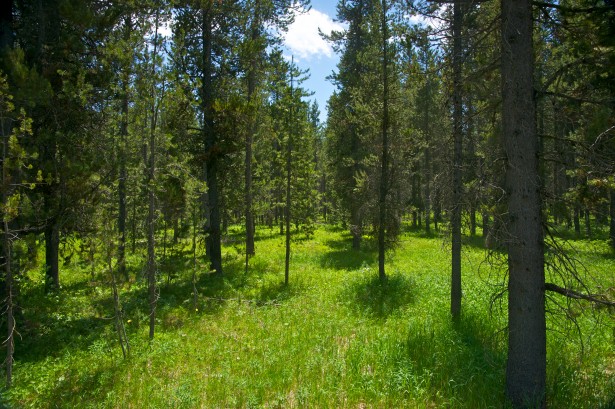
Many years ago, I traveled to a martial arts get together up in the pine-clad mountains. A few of us were housed for the night at a teacher's house in the woods. Over coffee in the morning, as we admired the pine trees outside the windows, one of my training partners said, "You know that feeling, how sometimes if you see a pine tree, it's like you're seeing all the other pine trees you've ever seen or all the other pine trees that ever existed and they're all in the same place at once and you can get from where you are to any of those other places when that happens?"


"No," I answered. I had certainly never had that experience, and I was someone with extensive knowledge of conifers and even many deciduous trees. Also, my training partner was entirely the wrong person to be making that kind of observation in the first place. As far as I knew, her priorities were chasing girls and her career as an journeyman electrician; she had never evinced a single mystical bone in her body.

Being the remorselessly rationalizing creature I am, I attempted to pin her down about exactly what she meant regarding this aspect of conifers that I was completely unfamiliar with. I was genuinely curious about what she meant.  However, the coffee had not yet kicked in, and maybe it could never kick in enough for someone like me. My companion refused to elaborate. She said something like, "Well, if you don't know it, you don't know it" and refused to talk more about it. I tucked the experience into my anomaly box, where it sat until I finally saw one of my own personal pine trees. It turns out they do exist.


I've had place and time collapse in on me to expand infinitely more than once since first hearing that peculiar story about the universal pine tree - or, perhaps more accurately, I have been more cognizant of it. The late October, California air flowing in through my window is one of these transport devices for me.The zafu (a species of plump flying carpet) is another and the Sonoran desert with all its denizens, seen and unseen, calling out to me is a third. They apparently do exist, but heaven only knows what yours might be.

Saturday, October 10, 2015

Personal Best

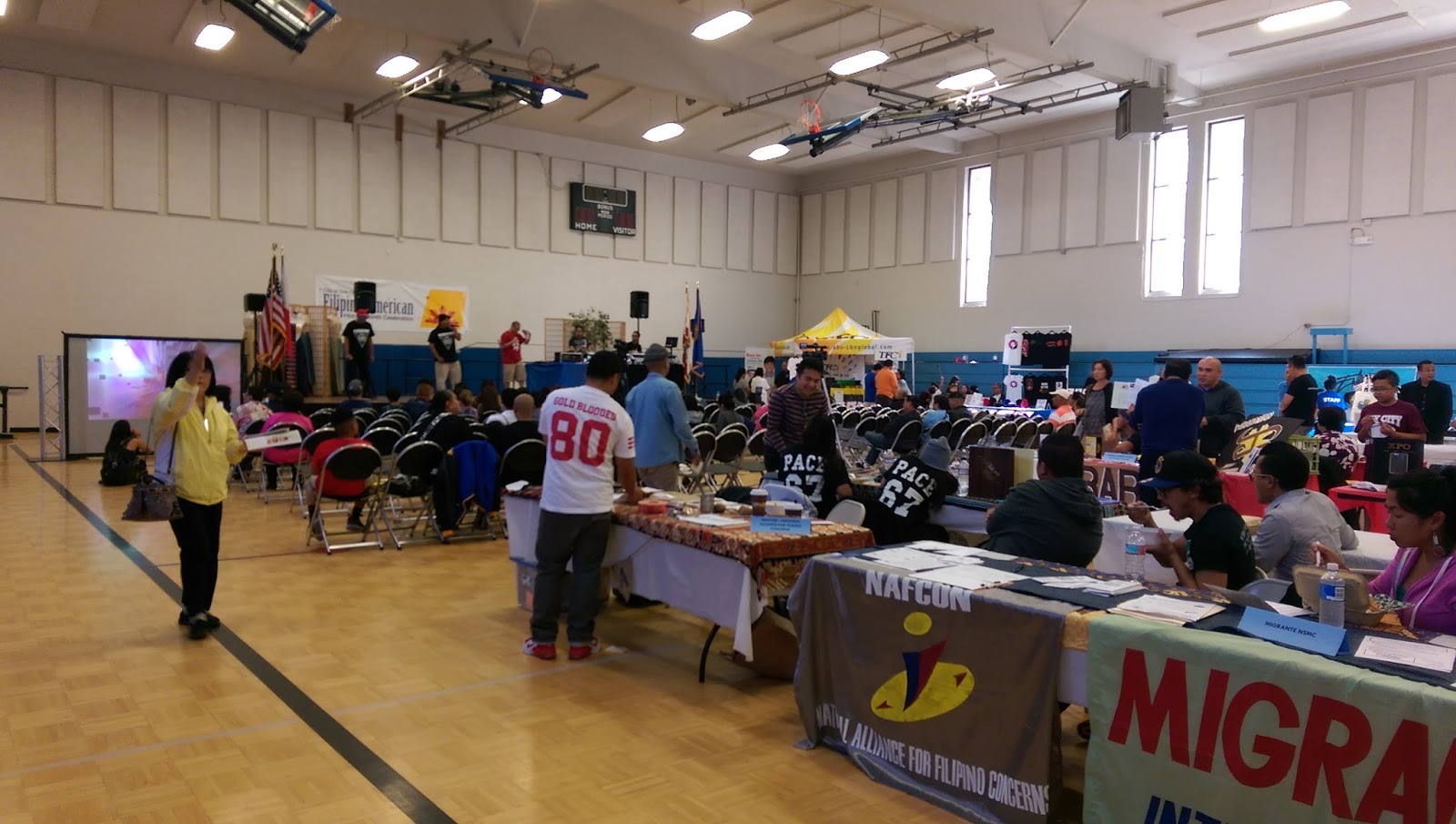
This morning Rey called to inform me that in addition to picking me up to go for our usual day at the dojo in San Francisco, we would be performing at the Fil-Am festival in Daly City afterward. Daly City has a large Filipino population and holds a Fil-Am festival every year, with various booths, activities and performances - music, martial arts, dance. Last year there was no stage, just a bare area on the floor. The green room was wherever we stopped to put our stuff down - part of the beauty of traveling light.


The day was fraught for a drive into the City, though. President Obama AND Kanye West were just leaving downtown as we were trying to traverse it; the Blue Angels were performing for Fleet Week, and traffic reports were warning to expect major delays as crowds fought for the best viewing locations. Oddly enough, traffic was much better than usual and we slid past Market Street with nary a presidential motorcade in sight.

This year the festival was in the same gym but had a stage set up (way down at the end where you see the three guys are standing. You can't hear it, but they're rapping in Tagalog and English). 


Being on the stage makes it a little easier for people to see what you're doing; having weapons go flying off into the audience every so often helps keep them alert. The occasional scream of pain from the stage is also a great way to win back an audience's wandering attention and often results in additional applause. However, I am particularly pleased to report that this was the first performance I have done where I did not get injured. This is a real personal best.

Having written that down, I realize it will mean nothing to most people. Let me put it another way: I've been doing martial arts of one kind or another for about a quarter of a century. At a certain point I stopped being motivated by gaining rank, since it was really training I was after. I often wonder how good my training is, since I can't devote nearly as much time and energy to it as I would like. However, today for the first time since I began in this art five years ago I managed to take on my teacher without getting injured. It may be a fluke, but it's still my personal best so far.


For our efforts we got meal tickets to the assembled food trucks. Roll Revolution promised something called a mac and bacon roll, which appealed to my Berkeley sensibilities and love of cheese. It also had the shortest line. This is what I got:


In my defense, I would like to point out that I had gotten up early that morning to make a very healthy slow cooker vegan casserole with stewed atragalus root, shiitake mushroom, yam, winter squash chunks, etc. However, the salty fries with ketchup on them were just what the doctor of divine dining experiences ordered. Those little eggroll-looking things actually had mac and cheese with flecks of bacon inside and were insanely delicious. The little pot of yellow is actually warm, melted cheese food product, which sent this child of Velveeta over her own gustatory waterfall. For desert, there was that long thing wrapped in white. It was basically cinammon, sugar and carbohydrates - sort of a snickerdoodle gone wrong. Called a churro or something.

Whatever it was, I had earned it.


After hanging out for a while after our performance, we headed back to the East Bay.  Traffic on the highway was strangely smooth for a Saturday afternoon. On Highway 80 coming up on the bridge to the East Bay, the Blue Angels were going directly over us. Being the passenger, I got some really good looks as the planes screamed overhead. For one of the passes they were low enough and I was in the right position to see just how close together they fly those planes. Let's just say it was extremely alarming and made me want to jump up and down and shout.